

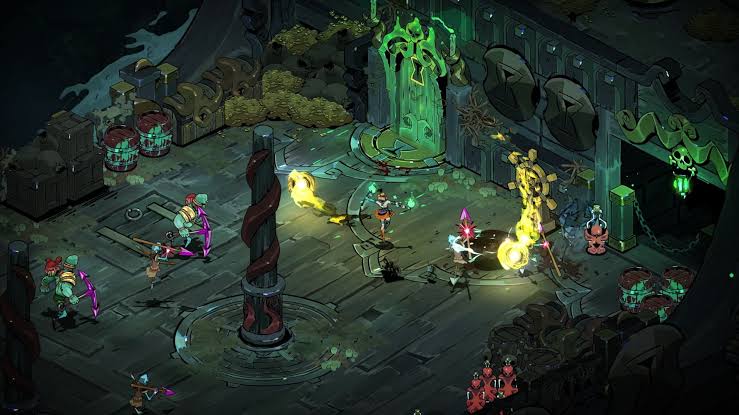
Hades turned repeated failure into one of the most satisfying parts of its design. Instead of treating defeat as a reason to restart without progress, Supergiant Games used each attempt to reveal more story, unlock new options and improve the player’s understanding of the underworld.
Released in 2020, the action game follows Zagreus, the son of Hades, as he tries to escape the realm of the dead. Each run sends him through a changing series of rooms filled with enemies, rewards and temporary powers.
That structure makes Hades easy to return to, even for players who usually prefer short sessions such as online roulette. A single attempt can last a few minutes or continue much longer, while every defeat still adds something useful.
The story continues after defeat
The main idea behind Hades is simple. Zagreus wants to leave the underworld, but every successful attempt eventually ends when his health runs out or he is overwhelmed by a boss.
Instead of returning to the beginning with nothing, Zagreus is sent back to the House of Hades. Characters react to his latest attempt, new conversations become available and the story gradually explains why he wants to escape.
This changes the emotional effect of losing. A failed run is disappointing, but it is rarely empty. The player may learn more about Zagreus’s family, discover a new part of the underworld or receive a resource that unlocks another upgrade.
The story also gives the repeated structure a clear purpose. Escaping is not the only objective. Players are learning about the characters and the conflict each time they return.
Each run creates a different build
Zagreus can use several weapons, including a sword, bow, shield, spear, fists and rail based firearm. Each weapon changes the rhythm of combat and encourages a different approach.
The sword rewards close range attacks, while the bow allows players to keep their distance. The shield combines defence with attacks that can be thrown across a room, and the fists require faster movement and more confidence around enemies.
During a run, players receive boons from the gods of Olympus. These change the effects of attacks, special moves and abilities. Aphrodite may provide effects that weaken enemies, Zeus can add lightning damage and Athena can offer defensive options.
The choice is not simply about selecting the largest number. A boon that works well with one weapon may be less useful with another. Players gradually learn to recognise combinations that fit their preferred style.
This system gives every run a clear identity. One attempt might focus on critical damage and fast attacks, while another relies on defensive effects and long range abilities.
The rooms reward different decisions
The underworld is divided into several regions, with rooms selected from a changing pool during each attempt. Players choose the next door based on the symbol shown on it.
A player may pick a room offering a god’s boon, a healing opportunity, extra currency or a permanent resource. Choosing one reward means giving up another, so even a short run involves constant decisions.
Some rooms are safer than others. A reward may be useful, but the route leading to it could contain difficult enemies or an awkward arena. Players need to think about their current health, weapon and build before continuing.
The layout never becomes completely random in a way that feels meaningless. Each region has its own enemies, hazards and visual style, while the changing order of rooms keeps the route from becoming a memorised checklist.
Boss fights test what the player has learned
Each main region ends with a boss encounter. These battles introduce patterns that need to be studied rather than defeated through repeated attacks alone.
The first boss teaches players to watch movement, avoid obvious strikes and identify safe moments to attack. Later fights add more complex phases, projectiles and arena hazards.
Bosses also change between attempts. Some receive additional modifiers after the player has completed the game, allowing experienced players to increase the challenge without simply facing enemies with larger health bars.
The fights are difficult, but the game communicates its rules clearly. Attack animations are readable, sound effects warn players about incoming danger and each phase has a recognisable rhythm.
That clarity makes a defeat useful. Players can identify the mistake instead of blaming a completely hidden mechanic.
Permanent upgrades prevent wasted time
Hades includes temporary improvements that disappear when a run ends, but it also provides permanent progression.
Darkness can be spent on upgrades within the Mirror of Night. These may improve health, dodging, critical chances or other abilities. Keys unlock additional weapons, while gemstones and other resources can be used to alter parts of the House of Hades.
The permanent systems give players control over the difficulty curve. Someone struggling with a particular region can improve their character before making another attempt, while a confident player can save resources for a different weapon or future option.
The game does not remove the need to improve mechanically. Upgrades help, but they cannot replace learning enemy patterns and understanding the spaces in which fights take place.
The characters make the hub feel alive
The House of Hades is more than a menu screen between attempts. It is a living location filled with characters whose relationships develop over time.
Achilles offers advice, Nyx explains parts of the underworld and other residents respond to Zagreus’s choices. Conversations are written to match the repeated structure, so characters often comment on recent events rather than delivering the same lines after every run.
The relationship system also connects to gameplay. Gifts can improve bonds, while some conversations unlock new abilities, quests or rewards.
This gives the player a reason to spend time in the hub instead of immediately starting another attempt. The House becomes a place where the consequences of each run are recorded.
Why Hades still deserves attention
Hades works because its systems support one another. The combat is fast, the randomised rooms create variety and the story gives every defeat a purpose.
The game also respects the player’s time. A run can be stopped after a short session, while longer attempts remain available for players who want to chase a complete escape.
Its strongest achievement is making repetition feel like progress. The player improves their reactions, learns more about the world, unlocks new equipment and watches the story develop at the same time.
That combination gives Hades lasting appeal. It is an action game for people who enjoy mastering combat, but it is also a story driven adventure for anyone who wants each attempt to reveal something new.