

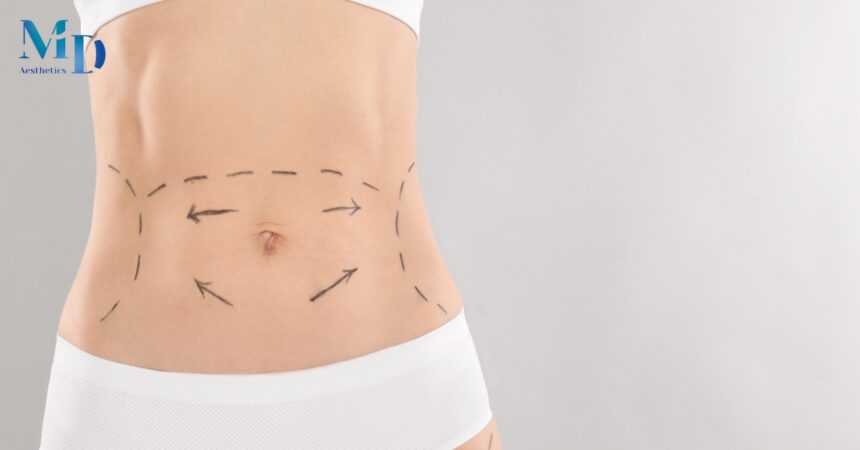
The appearance of the abdomen can change considerably after pregnancy, weight fluctuations and aging. Even when body weight remains within a healthy range, stretched skin or separation of the abdominal muscles may prevent the midsection from returning to its previous contour. For patients exploring tummy tuck in Turkey, understanding the differences between skin removal, muscle repair and fat reduction is essential before choosing a surgical approach.
What Is a Tummy Tuck?
A tummy tuck, medically known as abdominoplasty, is an operation designed to remove excess abdominal skin and reshape the midsection.
Depending on the patient’s anatomy, surgery may also involve tightening the abdominal wall when the rectus muscles have separated.
Unlike liposuction, which primarily removes fat, abdominoplasty can address significant skin redundancy.
The operation is particularly relevant when loose skin extends below the navel or when the abdominal wall has changed after pregnancy.
Why Can the Abdomen Remain Prominent Despite Exercise?
A protruding abdomen does not always result from excess body fat.
Several anatomical factors can contribute to its appearance:
- Loose skin following weight loss
- Stretching of the abdominal tissues
- Separation of the rectus abdominal muscles
- Localized subcutaneous fat
- Changes in posture and abdominal wall support
These factors require different treatment approaches.
Exercise can strengthen the abdominal muscles, but it does not remove substantial skin excess. Likewise, liposuction alone cannot correct significant muscle separation.
A physical examination helps determine which tissues are responsible for the patient’s concerns.
What Is Diastasis Recti?
Diastasis recti refers to widening of the connective tissue between the two rectus abdominal muscles.
It is commonly associated with pregnancy, although it can occur in other circumstances.
Some patients notice a central abdominal bulge, particularly when the abdominal wall is under tension.
During selected tummy tuck procedures, the surgeon may tighten the abdominal wall by bringing the separated muscle coverings closer together.
Not every patient requires this step. The decision depends on examination findings and the overall surgical plan.
Different Types of Tummy Tuck Surgery
The term tummy tuck includes several techniques, each designed for a different pattern of abdominal laxity.
Mini Tummy Tuck
A mini abdominoplasty generally focuses on a limited amount of loose skin below the navel.
It may be appropriate for selected patients whose concerns are confined to the lower abdomen.
Because the treated area is smaller, it does not provide the same degree of correction as a full abdominoplasty.
Full Tummy Tuck
A full abdominoplasty addresses more extensive abdominal skin excess.
The operation commonly involves a lower abdominal incision, removal of redundant skin and repositioning of the navel.
Abdominal wall tightening may also be performed when indicated.
Extended Abdominoplasty
When skin excess continues toward the flanks, the incision may need to extend farther around the sides.
Patients with circumferential laxity may require a body lift rather than an extended tummy tuck.
Who May Be a Suitable Candidate?
Potential candidates generally have stable body weight, suitable overall health and concerns that can reasonably be improved through abdominal surgery.
The surgeon assesses previous operations, pregnancy history, skin quality, abdominal wall condition and future weight-loss plans.
Patients considering another pregnancy may be advised to postpone surgery because subsequent abdominal stretching can affect the result.
Tummy tuck surgery is not intended as a primary method of weight loss.
How Is Abdominoplasty Performed?
The operation is usually performed under general anesthesia.
After preoperative marking, the surgeon makes an incision according to the selected technique and separates the relevant tissues to access the abdominal wall.
Where appropriate, abdominal wall tightening is performed.
Excess skin is removed, the remaining tissues are repositioned and the incisions are closed.
In a full tummy tuck, the navel is generally brought through a new opening in the repositioned abdominal skin.
The exact technique varies according to anatomy and surgical requirements.
Can Liposuction Be Combined With a Tummy Tuck?
Some patients have both abdominal skin laxity and localized fat deposits around the waist or flanks.
Liposuction may be considered to refine selected areas during the same treatment plan.
However, combining procedures can increase operative complexity. The surgeon must consider blood supply to the abdominal tissues, total surgical duration and the patient’s health.
The decision should prioritize safe healing rather than maximum fat removal.
Recovery After Tummy Tuck Surgery
Recovery depends on the extent of tissue removal and whether abdominal wall tightening has been performed.
Swelling, bruising, discomfort and a sensation of tightness are common during the early postoperative period.
Patients may initially find it difficult to stand completely upright because of tension around the incision.
Walking is generally introduced gradually, while heavy lifting and strenuous exercise are restricted.
Returning to Work and Exercise
The appropriate return-to-work timeline depends on occupational demands and the extent of surgery.
Desk-based work may be resumed earlier than physically demanding employment, but individual recovery varies.
Exercise should be restarted according to the surgeon’s instructions, particularly when abdominal wall repair has been performed.
What Happens to the Surgical Scar?
A tummy tuck generally leaves a lower abdominal scar.
Its length depends on the amount of skin removed and the chosen technique.
The surgeon aims to position the incision where clothing may conceal it when possible.
Although scars often become less noticeable as they mature, they remain permanent.
Patients should also understand that scar quality is influenced by individual healing, wound tension and postoperative care.
Potential Risks of Abdominoplasty
Possible complications include infection, bleeding, fluid accumulation, wound-healing problems, changes in sensation and unfavorable scarring.
Blood clots are another important surgical risk, particularly in patients with additional risk factors.
A comprehensive preoperative assessment helps identify concerns that may require treatment modification or postponement.
Tummy Tuck Surgery in Istanbul for International Patients
Patients considering tummy tuck surgery in Istanbul should evaluate the surgeon’s qualifications and the facilities where the operation will take place.
Postoperative arrangements deserve particular attention because abdominal surgery can temporarily restrict mobility.
International patients should confirm how long they need to remain in Turkey, when follow-up appointments will occur and how postoperative concerns will be addressed after returning home.
Travel plans should follow medical advice rather than a fixed holiday schedule.
Maintaining Abdominal Contour After Surgery
A tummy tuck can remove redundant skin and improve abdominal contour, but it cannot prevent future changes associated with aging, pregnancy or substantial weight fluctuations.
Stable weight, appropriate exercise and general health habits may help maintain the result over time.
Patients researching abdominoplasty, abdominal muscle repair and surgical recovery can explore additional treatment information at https://muratdiyarbakirlioglu.com/en/. The most suitable approach should be determined through an individualized examination that considers skin excess, abdominal wall condition, medical history and the patient’s long-term goals.