

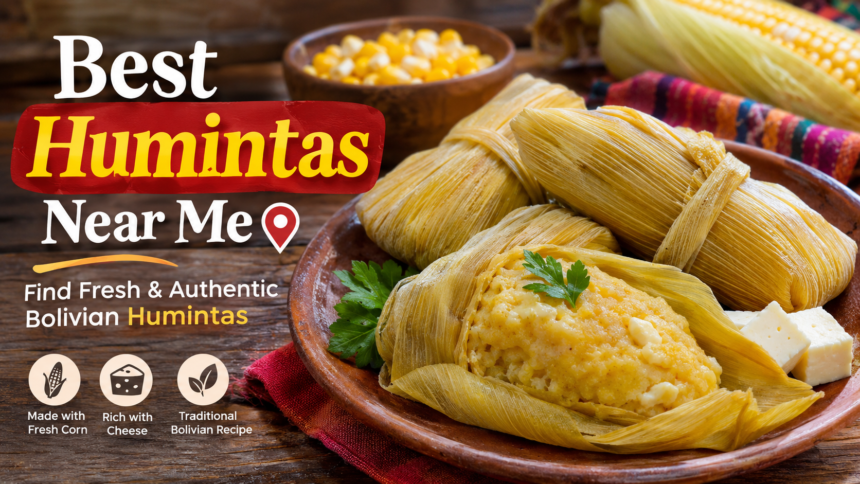
The best humintas near me are freshly prepared Bolivian corn cakes made with ground sweet corn, cheese, and traditional seasonings, often wrapped in corn husks and steamed or baked. For the most authentic experience, look for Bolivian restaurants, South American food markets, specialty bakeries, and local vendors that prepare humintas using fresh ingredients.
Finding good humintas isn’t always easy, especially if you live somewhere with few South American restaurants. However, knowing what to search for, which varieties to try, and how to recognize quality can make a big difference.
Whether you’re tasting humintas for the first time or searching for the comforting flavor of a homemade family recipe, this guide will help you find a delicious option nearby.
What Are Humintas?
Humintas are traditional corn-based dishes associated with Bolivia and the wider Andean region of South America. They are commonly prepared with freshly ground corn, cheese, butter or another type of fat, and seasonings.
The mixture is often placed inside corn husks, folded into small parcels, and cooked until tender.
Unlike ordinary cornbread, which generally uses cornmeal, traditional humintas often rely on fresh corn kernels. This gives them a naturally sweet flavor and a soft, moist texture.
The combination of fresh corn and cheese creates a pleasant balance between sweetness and saltiness. Some recipes also contain anise seeds, chili peppers, or sugar.
Humintas have a long history in Andean cooking and remain a familiar breakfast or afternoon snack in Bolivia.
Where to Find the Best Humintas Near Me
The easiest way to find authentic humintas near you is to search for restaurants and vendors specializing in Bolivian or other Andean cuisines.
Google Maps can be particularly useful because it allows you to compare restaurant locations, customer reviews, opening hours, and menu photographs.
Start by searching for “humintas near me” or “Bolivian restaurants near me.”
If those searches don’t return useful results, try alternative names such as “humitas,” “Bolivian corn tamales,” or “South American corn cakes.”
Humintas aren’t always listed under the same name, and some restaurants serve them only on certain days.
Local South American grocery stores and community food markets are also worth checking. Some specialty stores sell frozen humintas or can recommend people who prepare them for private orders.
Before traveling, contact the business to confirm that humintas are currently available. A restaurant serving Latin American food doesn’t necessarily have them on its menu.
Best Places to Buy Humintas
Several types of food businesses are worth exploring when you’re searching for freshly made humintas.
Bolivian restaurants: These are a natural starting point because humintas are an established part of Bolivian food culture. Restaurants specializing in traditional cooking may offer steamed or baked versions.
South American bakeries: Some bakeries specializing in Andean products prepare corn-based snacks and savory pastries. Check the menu before visiting.
Latin American food markets: Specialty food markets sometimes sell homemade dishes, refrigerated products, or frozen corn-based foods.
Local food vendors: Independent cooks and small food businesses may prepare humintas using recipes passed down through their families.
Catering businesses: Some Bolivian caterers accept advance orders for traditional snacks, especially when customers need larger quantities.
Each option has its advantages. Restaurants are convenient for eating immediately, while specialty stores and home-based cooks may be better for takeaway or advance orders.
Availability depends on your city, so it’s important to verify individual sellers rather than rely on an outdated recommendation.
Popular Types of Humintas
Not all humintas taste or look exactly the same. Different regions and families prepare them using their preferred ingredients and cooking techniques.
<text> </text>
Steamed Humintas
Steamed humintas are among the most recognizable varieties. The fresh corn mixture is wrapped in corn husks and cooked with steam until it becomes firm yet tender.
The result is moist, fragrant, and naturally sweet. Cheese inside the corn mixture adds a savory contrast.
This variety is an excellent choice if you want to experience the traditional taste of fresh corn.
Baked Humintas
Baked humintas have a slightly different texture. They may develop a golden exterior while remaining soft inside.
Some are baked in corn husks, while others are prepared in baking dishes.
Baking creates a richer roasted flavor and can make the surface slightly firmer than that of steamed humintas.
Sweet Humintas
Sweet humintas highlight the natural sweetness of corn. Depending on the recipe, they may include sugar, cinnamon, anise, or raisins.
They are particularly enjoyable as a breakfast snack or an afternoon treat with coffee.
Savory Humintas
Savory humintas generally feature cheese, salt, and sometimes mild chili peppers.
The cheese provides richness, while the corn keeps the dish slightly sweet.
If you prefer a balanced snack rather than a dessert-like preparation, savory humintas are worth trying.
How to Recognize Fresh Humintas
Freshness is one of the most important factors when choosing humintas.
A well-prepared huminta should have a noticeable corn aroma, a moist interior, and a texture that holds together without becoming excessively dry or rubbery.
The corn flavor should remain prominent, even when the recipe includes cheese or additional seasonings.
If you’re buying a wrapped huminta, the corn husk should be intact and reasonably clean. The husk is used for cooking and presentation, not as an edible part of the dish.
Freshly cooked humintas are generally more enjoyable when served warm. However, previously cooked humintas can also taste good when they have been properly refrigerated and reheated.
Pay attention to how the business stores and serves its food. Clean preparation areas, appropriate food temperatures, and careful handling matter just as much as flavor.
What Do Authentic Humintas Taste Like?
The flavor of authentic humintas is simple but distinctive.
Fresh corn provides natural sweetness, while cheese adds saltiness and richness. Butter or another traditional cooking fat contributes to the smooth, satisfying texture.
Some recipes have a gentle hint of anise, giving them a pleasant aroma without overwhelming the corn.
Steamed humintas tend to taste delicate and creamy. Baked varieties may have a slightly roasted flavor and a firmer exterior.
The texture is also important. A good huminta should feel tender and substantial rather than watery or overly dense.
If you’ve never tried one before, a freshly steamed cheese huminta is a good place to start.
Humintas vs. Tamales
Humintas and Mexican tamales share an obvious similarity: both can be cooked inside corn husks.
However, their ingredients and traditional preparations are different.
Humintas commonly use fresh, ground corn as the main ingredient. This gives them a sweeter flavor and a softer texture.
Mexican tamales are often made with masa, a dough traditionally prepared from nixtamalized corn. Depending on the recipe, tamales may contain meat, vegetables, cheese, chili sauces, or sweet fillings.
Humintas are especially associated with Bolivia and other Andean countries, while tamales have their own rich traditions across Mexico and much of Latin America.
Neither dish is simply a substitute for the other. Both are worth trying to appreciate their different flavors and histories.
How Much Do Humintas Cost?
The price of humintas varies considerably depending on the country, restaurant, portion size, and ingredients used.
A small huminta sold by a traditional market vendor may cost less than one served at a specialty restaurant.
Imported ingredients, labor-intensive preparation, and limited local availability can also affect the price.
When comparing options, consider more than the menu price.
A large huminta made with fresh corn and generous cheese may provide better value than a smaller, less carefully prepared version.
If you’re ordering several, ask whether the business offers a family pack or a discount for larger orders.
Because prices change between locations, checking current menus or contacting sellers is the most reliable way to compare costs.
How to Choose the Best Humintas Restaurant
Finding the best humintas isn’t necessarily about choosing the restaurant with the highest overall rating.
A busy restaurant may have excellent reviews for other dishes without being particularly experienced at preparing humintas.
Start by looking for reviews that specifically mention the dish. Comments about freshness, corn flavor, cheese filling, and portion size are especially helpful.
Photographs from customers can also provide useful clues about presentation and texture.
Before ordering, consider these questions:
- Are the humintas prepared fresh or reheated from frozen?
- Does the restaurant offer steamed, baked, or both varieties?
- What type of cheese is used?
- Are sweet and savory options available?
- Can the humintas be ordered for takeaway?
- Does the restaurant prepare them daily or only on selected days?
A business that can clearly explain its ingredients and preparation methods is often a promising option.
Can You Order Humintas for Delivery?
Humintas may be available through restaurant delivery platforms, independent food sellers, or specialty grocery services.
Search using several variations of the dish’s name because food delivery apps don’t always categorize traditional dishes consistently.
If you find a restaurant that sells humintas, check whether they are offered for delivery or pickup.
Steamed humintas generally travel reasonably well when wrapped securely, although their texture is usually best shortly after cooking.
For longer delivery distances, ask how the food is packaged and whether it needs reheating.
If you order frozen humintas, follow the seller’s storage and cooking instructions. This helps preserve their texture and ensures they are heated properly.
Can You Make Humintas at Home?
If you can’t find authentic humintas nearby, preparing them at home is another option.
The process takes some patience, particularly when removing the corn kernels and folding the husks, but the ingredients are relatively straightforward.
For a basic homemade version, you will need:
- Fresh corn on the cob, with husks
- Fresh cheese or a suitable mild, salty cheese
- Butter
- A little sugar, depending on the recipe
- Salt
- Anise seeds, if preferred
- Optional mild chili seasoning
Carefully remove the corn husks and keep the largest ones for wrapping.
Cut the kernels from the cobs and grind them in a food processor until they form a thick mixture. Avoid making the mixture excessively watery.
Add the butter, salt, and chosen seasonings.
Place a portion of the corn mixture onto overlapping husks, add cheese, and fold the husks into secure parcels.
Steam until the corn mixture is fully cooked and set. Depending on the recipe and size, this may take approximately 40–60 minutes.
Cooking times and ingredient proportions vary between traditional recipes, so following a tested recipe is advisable for your first attempt.
Making humintas at home also gives you the freedom to adjust the sweetness and cheese filling to your taste.
Are Humintas Healthy?
Humintas can be part of a balanced diet, although their nutritional content depends on the ingredients and portion size.
Corn provides carbohydrates for energy and contains some fiber, vitamins, and minerals.
Cheese contributes protein and calcium but may also increase the saturated fat and sodium content.
Recipes containing additional butter, lard, or sugar will generally be richer than simpler versions.
Steaming avoids the additional oil associated with frying, but a steamed huminta isn’t automatically lower in calories than every baked version. The complete recipe matters.
For people with dietary restrictions, it’s important to check the ingredients.
Humintas made only with corn and other naturally gluten-free ingredients may be suitable for a gluten-free diet, but cross-contact and added flour must be considered.
Traditional cheese-filled versions are not vegan, and anyone avoiding dairy should ask about milk, butter, and cheese before ordering.
Best Time to Eat Humintas
In Bolivia, humintas are often enjoyed for breakfast or as an afternoon snack.
A warm huminta with coffee is a particularly familiar combination.
They can also be served as a light meal, depending on their size and ingredients.
Steamed humintas are especially comforting when eaten fresh, while baked versions make a satisfying savory snack.
If you’re visiting a traditional food market in Bolivia, morning and afternoon are useful times to look for them, although individual vendors have their own schedules.
Outside Bolivia, availability may depend more on restaurant hours, local demand, and advance preparation.
How to Store Leftover Humintas
Proper storage helps maintain both food quality and safety.
Cooked humintas should be refrigerated promptly in suitable containers. Perishable food should generally not remain at room temperature for more than two hours, or one hour when temperatures exceed 90°F (32°C).
As a general food-safety guideline, eat refrigerated leftovers within three to four days.
For longer storage, freeze them in airtight, freezer-safe packaging.
When reheating, steam or microwave the humintas until thoroughly hot throughout. Adding a little moisture during reheating can help prevent the corn mixture from drying out.
Avoid repeatedly reheating the same batch, and never rely on appearance alone to determine whether improperly stored food is safe.
Why Freshly Made Humintas Are Worth Trying
There’s something particularly satisfying about a simple dish made carefully from a few familiar ingredients.
Humintas don’t need complicated sauces or elaborate presentation. Their appeal comes from the fresh corn, tender texture, and contrast between sweetness and savory cheese.
They also offer a connection to Andean food traditions that have been maintained across generations.
Many home cooks prepare humintas using family recipes, and small differences in ingredients can produce noticeably different results.
Trying a freshly prepared huminta is an opportunity to appreciate those regional and personal variations.
If you enjoy traditional comfort foods, this is a dish well worth seeking out.
Frequently Asked Questions
1. Where can I find the best humintas near me?
You can search Google Maps, Bolivian restaurants, South American food markets, and specialty food vendors. Try searches such as “humintas near me,” “Bolivian humintas,” or “humitas near me.” Always check the current menu before visiting.
2. What are humintas made of?
Humintas are usually made with fresh ground corn, cheese, butter or another cooking fat, and seasonings. Some recipes also contain sugar, anise seeds, chili peppers, or raisins.
3. Are humintas the same as tamales?
No. Although both dishes may be wrapped in corn husks, humintas typically use fresh corn, while Mexican tamales commonly use prepared masa dough. Their flavors, textures, and traditional fillings can differ.
4. Are humintas sweet or savory?
Humintas can be sweet, savory, or somewhere between the two. Savory versions often contain cheese, while sweeter preparations may include additional sugar, cinnamon, or raisins.
5. Can I buy frozen humintas?
Yes, some specialty Latin American food stores and independent vendors offer frozen humintas. Availability depends on your location. Follow the supplier’s instructions for storing and reheating them.
6. Are humintas vegetarian?
Many traditional humintas are meat-free, particularly cheese-filled versions. However, some recipes use animal fat, so vegetarians who avoid lard should confirm the ingredients before ordering.
7. Are humintas gluten-free?
Traditional recipes based on corn can be gluten-free, but not all versions are guaranteed to be. Some cooks may add flour, and restaurant kitchens can have cross-contact with wheat. Ask the seller if you need to avoid gluten.
8. What is the difference between steamed and baked humintas?
Steamed humintas usually have a softer, moister texture. Baked humintas can develop a slightly firmer exterior and a roasted flavor. Both are traditional preparation styles.
9. Can I make humintas without corn husks?
Yes, some baked adaptations use an oven-safe dish instead of husks. However, traditional wrapping contributes to the presentation and helps retain moisture during cooking.
10. What cheese is best for humintas?
A fresh, mildly salty cheese is a traditional choice. Queso fresco is one suitable option, although the ideal cheese depends on the regional recipe. It should complement the natural sweetness of the corn.
11. Are humintas spicy?
Not necessarily. Many humintas have a mild flavor. Some savory recipes use chili peppers for extra seasoning, but the level of heat varies.
12. Can I order humintas online?
You may be able to order humintas through restaurant delivery services, Latin American food businesses, or independent caterers. Search for both “humintas” and “humitas” to find more possible listings.
13. How long do homemade humintas last?
When properly refrigerated, cooked humintas should generally be eaten within three to four days. Freeze them if you need to store them longer.
14. What should I look for when buying humintas?
Look for a fresh corn aroma, a moist but well-set texture, balanced seasoning, and proper food handling. Reviews that mention humintas specifically are more useful than general restaurant ratings.
15. What is the best way to eat humintas?
Humintas are particularly enjoyable when served warm. They can be eaten on their own, enjoyed with coffee, or served alongside other foods as part of a larger meal.
Final Thoughts
Finding the best humintas near me starts with knowing what makes this traditional Bolivian dish special: fresh corn, carefully balanced seasoning, delicious cheese, and proper cooking.
Bolivian restaurants, South American markets, and independent food vendors are all worth exploring. Because availability varies by location, checking recent menus and contacting sellers is the safest way to avoid a wasted trip.
If you have the choice, try both steamed and baked humintas. Their different textures make each version enjoyable in its own way.
And if you can’t find a local seller, homemade humintas offer another way to discover the flavors of this comforting Andean specialty.
The best huminta isn’t necessarily the most expensive or the most attractively presented. It’s the one that brings out the natural flavor of corn and tastes freshly, carefully prepared.
Sources and Further Reading
The culinary background and food-safety information in this article were researched using the following resources: