

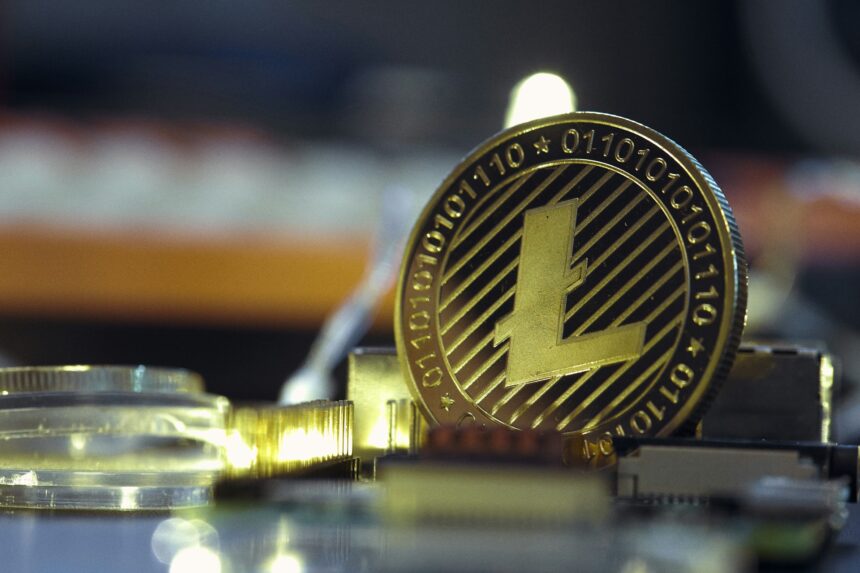
Litecoin is one of the oldest cryptocurrencies still actively used today.
Created in 2011 by Charlie Lee, it appeared only a few years after Bitcoin and was designed as a digital currency that could offer faster and less expensive transactions. While thousands of cryptocurrencies have launched since then, Litecoin has remained part of the market through multiple bull markets, crashes and major changes in blockchain technology.
Litecoin was created using Bitcoin’s open-source code, which explains why the two cryptocurrencies share many characteristics. Both operate without a central authority, use Proof of Work to secure their networks and have a limited maximum supply. Transactions are recorded on a public blockchain and confirmed by miners.
There are also important differences.
Bitcoin has a maximum supply of 21 million BTC, while Litecoin has a maximum supply of 84 million LTC. Litecoin also produces blocks considerably faster. A new Litecoin block is targeted approximately every 2.5 minutes, compared with roughly 10 minutes for Bitcoin. This can allow transactions to receive initial confirmations more quickly.
Litecoin also uses a different mining algorithm. Bitcoin mining is based on SHA-256, while Litecoin uses Scrypt. Originally, Scrypt was intended to make mining more accessible with ordinary computer hardware, although specialized mining equipment eventually became dominant in Litecoin mining as well.
Another similarity is the halving mechanism. Litecoin periodically reduces the reward miners receive for producing new blocks. This gradually slows the introduction of new LTC into circulation and helps maintain its predetermined supply schedule.
So why does Litecoin remain relevant when newer blockchains offer smart contracts, decentralized applications and significantly more complex functionality?
One reason is precisely that Litecoin has a relatively focused purpose. It does not attempt to be the foundation for every type of blockchain application. Its primary function remains transferring digital value.
Its long operating history is another factor. Cryptocurrency projects frequently appear, attract considerable attention and disappear within a few years. Litecoin has operated since 2011, giving it a much longer track record than most digital assets.
Litecoin has also been used as an environment where technologies related to Bitcoin can be implemented and observed. Segregated Witness, commonly known as SegWit, was activated on Litecoin before it was activated on Bitcoin. Litecoin has additionally adopted technologies such as the Lightning Network.
A particularly interesting development has been MimbleWimble Extension Blocks, or MWEB. This optional feature was introduced to improve transaction privacy and scalability. It allows users to make certain transaction details more private while continuing to operate within the broader Litecoin ecosystem.
Accessibility also contributes to Litecoin’s longevity. LTC has historically been supported by many cryptocurrency exchanges, wallets and payment services. For a cryptocurrency intended primarily for transferring value, broad infrastructure support can be just as important as introducing new technical features.
That does not mean Litecoin is without competition. Stablecoins have become popular for transferring predictable amounts of value, while newer blockchain networks can offer fast transactions alongside smart contracts and other capabilities. Bitcoin’s Lightning ecosystem also addresses some of the speed and cost limitations associated with traditional on-chain transactions.
Litecoin therefore occupies an unusual position. It is no longer one of the newest or most technologically ambitious cryptocurrencies, but longevity itself has become one of its distinguishing characteristics.
Its continued relevance comes from a combination of relatively fast transactions, established infrastructure, ongoing development and more than a decade of network operation. In an industry where projects can rise and disappear remarkably quickly, simply continuing to function as intended can be a meaningful achievement.
Read also Bubble mailers for B2B shipping: construction, sizes and when to use them